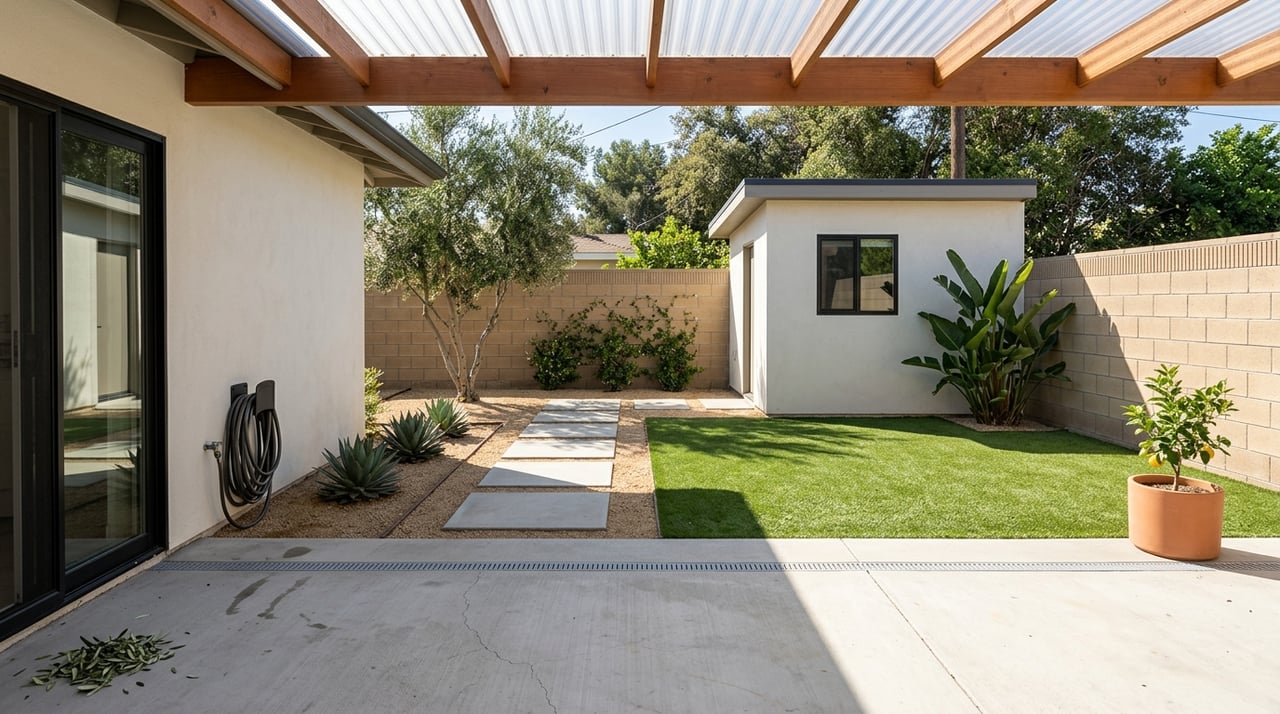
If you are buying in Sherman Oaks and hoping to add an ADU later, the right property can create a lot of flexibility. It can support multigenerational living, provide space for a caregiver or adult child, or become a long-term rental asset. But ADU potential is not something you can judge by lot size alone, so it pays to evaluate each property carefully before you remove contingencies. Let’s dive in.
Why Sherman Oaks Is Parcel Specific
Sherman Oaks is not a one-size-fits-all ADU market. Properties in the area fall within different community plan areas, including the Sherman Oaks, Studio City, Toluca Lake, Cahuenga Pass Community Plan Area and the Van Nuys, North Sherman Oaks Community Plan Area. That matters because planning context, overlays, and site conditions can vary from one parcel to the next.
The City of Los Angeles recommends using ZIMAS to review a property’s zoning, land use designation, permit history, and overlays. It is also the place where you can see whether a parcel is affected by tools like a Historic Preservation Overlay Zone, a Specific Plan, or a Community Design Overlay. Since many Los Angeles properties have some type of overlay, this should be part of your due diligence on every Sherman Oaks purchase.
Start With ADU Rules
In Los Angeles, ADUs, JADUs, and Movable Tiny Houses can be built in areas that allow residential use. The city adopted its ADU ordinance in 2019 and updated implementation in line with state law.
State guidance also makes clear that ADUs are meant to function as infill housing that can support rental income, multigenerational living, and aging in place. For you as a buyer, that means an ADU-capable property may offer value beyond simple resale. It can become a flexible part of your long-term housing plan.
What Strong ADU Potential Looks Like
Lot size is not everything
A common mistake is assuming a larger lot automatically makes a better ADU candidate. Under California law, local agencies cannot impose minimum lot size requirements for ADUs, and standards like lot coverage, floor area ratio, or open space cannot be used to block an ADU of at least 800 square feet with four-foot side and rear setbacks.
That means a smaller Sherman Oaks lot may still work well if the house placement and yard layout are efficient. In many cases, the relationship between the existing home and the backyard matters more than raw square footage.
Backyard layout matters
For a detached ADU, building placement is a major factor. Los Angeles guidance says detached ADUs generally must be located behind the primary residence, with limited exceptions.
When you tour homes, pay attention to how much usable backyard depth exists behind the house. A deep, rectangular rear yard is often easier to work with than an irregular lot where the house already occupies most of the buildable area.
Existing structures can be a big advantage
An existing garage, shed, or other accessory structure may improve the property’s ADU potential. Conversions are especially attractive because they generally do not trigger new setback requirements, and conversions of existing space are not subject to unit-size requirements.
In practical terms, that can make a garage conversion easier and more cost-effective than building a detached ADU from scratch. For buyers comparing two similar homes, the one with a viable conversion candidate may offer the smoother path.
JADU potential can save a tighter deal
If a detached ADU will be difficult, a JADU may still be possible. A JADU is capped at 500 square feet and must be created within the existing single-family residence or an accessory structure.
That makes JADUs worth considering when the lot is tight but you still want some future flexibility. They are not the same as a standard ADU, but they can still add meaningful use value.
Parking Can Change the Equation
Parking is another important filter when you are evaluating a Sherman Oaks property for ADU use. State law limits required ADU parking to one space per unit or bedroom, whichever is less, and there are several situations where no parking can be required.
Those exemptions can apply if the property is within one-half mile of public transit, within a historic district, or if the ADU is created within the primary residence or an accessory structure. There are also exemptions when on-street permits are unavailable to the ADU occupant, when a car-share vehicle is within one block, or when the ADU is submitted with a new home on the lot.
One more important point: if a garage, carport, or covered parking area is removed to create the ADU, replacement parking is not required. That can make garage conversions more appealing than many buyers first assume.
Watch for Overlays and Site Constraints
A parcel may look promising at first glance and still have issues that deserve closer review. That is why ZIMAS is such an important starting point for Sherman Oaks buyers.
Use it to confirm zoning, check permit history, and identify overlays that may affect the build path. Los Angeles planning guidance also notes a special concern for lots that are both in a Very High Fire Hazard Severity Zone and a Hillside Area, so hillside or fire-zone properties deserve extra scrutiny before you commit.
Understand the Real Value of an ADU
Income is only one benefit
Many buyers think about ADUs only in terms of rent. That can be part of the picture, but state guidance highlights other benefits too, including multigenerational living, privacy for family members, and aging in place.
For you, that can mean more options over time. A future ADU might start as housing for a relative, later become a long-term rental, or serve as a flexible living space as your needs change.
Fees may favor smaller units
Size can affect the economics. ADUs with 750 square feet of interior livable space or less are exempt from impact fees, and JADUs with 500 square feet or less are exempt as well.
There may also be savings on utilities in certain situations. Existing-space ADUs and JADUs are not treated as new residential use for water and sewer connection fee purposes unless they are built at the same time as a new single-family home.
New construction may cost more than you expect
A detached ground-up ADU can offer the most design freedom, but it may also come with added costs. According to LADBS ADU guidance, newly constructed detached ADUs must have solar panels, and fire sprinklers are required only when the existing primary residence would already require them.
That is why buyers should compare conversion and new-build scenarios early. The cheaper purchase is not always the better ADU opportunity if the future construction path is more complex.
Think Long Term About Use
If your main goal is flexibility, it helps to understand how ADUs are typically used under current rules. State guidance says local agencies may require ADUs and JADUs to be rented for terms longer than 30 days, and JADUs cannot be used as short-term rentals.
For most buyers, the safest assumption is that an ADU will function as a long-term housing asset. That could still be very valuable, but it is best to underwrite the opportunity with realistic expectations.
Permitting Is Streamlined, Not Automatic
ADUs and JADUs that qualify under state law are approved ministerially, which means there is no discretionary hearing process. State guidance says the permitting agency must let the applicant know within 15 business days whether an application is complete, and complete applications must be acted on within 60 days.
That is helpful, but it does not mean every property is easy. Site conditions, layout challenges, overlays, and design choices still affect timelines and cost.
Build your team early
The smartest buyers line up their ADU team before they get too far into escrow. Depending on the property, that may include:
- A local real estate agent who understands Sherman Oaks zoning patterns
- An architect or designer familiar with tight-site ADU layouts
- A contractor who can price both conversions and new detached builds
- A permit specialist or attorney if unusual zoning questions come up
Los Angeles also offers a Standard Plan Program for pre-approved ADU plans. If a plan fits the site and foundation conditions, that can help reduce plan-check time.
A Practical ADU Checklist for Buyers
Before removing contingencies on a Sherman Oaks home, try to answer these questions:
- What does ZIMAS show for zoning, overlays, and permit history?
- Which community plan area applies to the parcel?
- Is there an existing garage, shed, bonus room, or accessory structure that could support a conversion?
- Is the backyard deep enough for a detached ADU behind the main house?
- Could the property qualify for a parking exemption?
- Is the lot in both a hillside area and a Very High Fire Hazard Severity Zone?
- Are there HOA or CC&R documents that try to restrict ADUs, even though state guidance says qualifying prohibitions are void or unenforceable on eligible single-family lots?
This kind of review can help you separate a home that merely looks promising from one that truly offers workable ADU potential.
Sherman Oaks Buyers Need a Property-by-Property Review
In Sherman Oaks, ADU opportunity is rarely about one headline number. It is about zoning context, overlays, building placement, parking relief, existing structures, and how all of those factors come together on one parcel.
If you are buying with ADU goals in mind, a careful review upfront can save time, money, and frustration later. Working with a local agent who understands the San Fernando Valley and knows how to spot practical ADU opportunities can make that process much more efficient. If you want help identifying properties with stronger ADU potential in Sherman Oaks, connect with Arthur Aslanian for experienced, neighborhood-focused guidance.
FAQs
What is the best first step for evaluating ADU potential in Sherman Oaks?
- Start by checking the property in ZIMAS to review zoning, overlays, land use, and permit history.
Does a larger lot always mean better ADU potential in Sherman Oaks?
- No. Lot size alone is not decisive because California law limits how local standards can block qualifying ADUs, and layout often matters more than size.
Can a garage conversion be easier than building a new detached ADU in Sherman Oaks?
- Yes. Existing garage or accessory-structure conversions can be attractive because they generally do not trigger new setback requirements and may reduce construction complexity.
Are parking requirements always a problem for ADUs in Sherman Oaks?
- No. State law includes several parking exemptions, including cases involving transit access, historic districts, and conversions within existing structures.
Can an ADU in Sherman Oaks be used for short-term rentals?
- The safest assumption is no for most buyers planning ahead, since local agencies may require rentals longer than 30 days and JADUs cannot be used as short-term rentals.
How long can ADU permitting take in Los Angeles?
- State guidance says the permitting agency must identify application completeness within 15 business days and act on complete ministerial ADU applications within 60 days.
