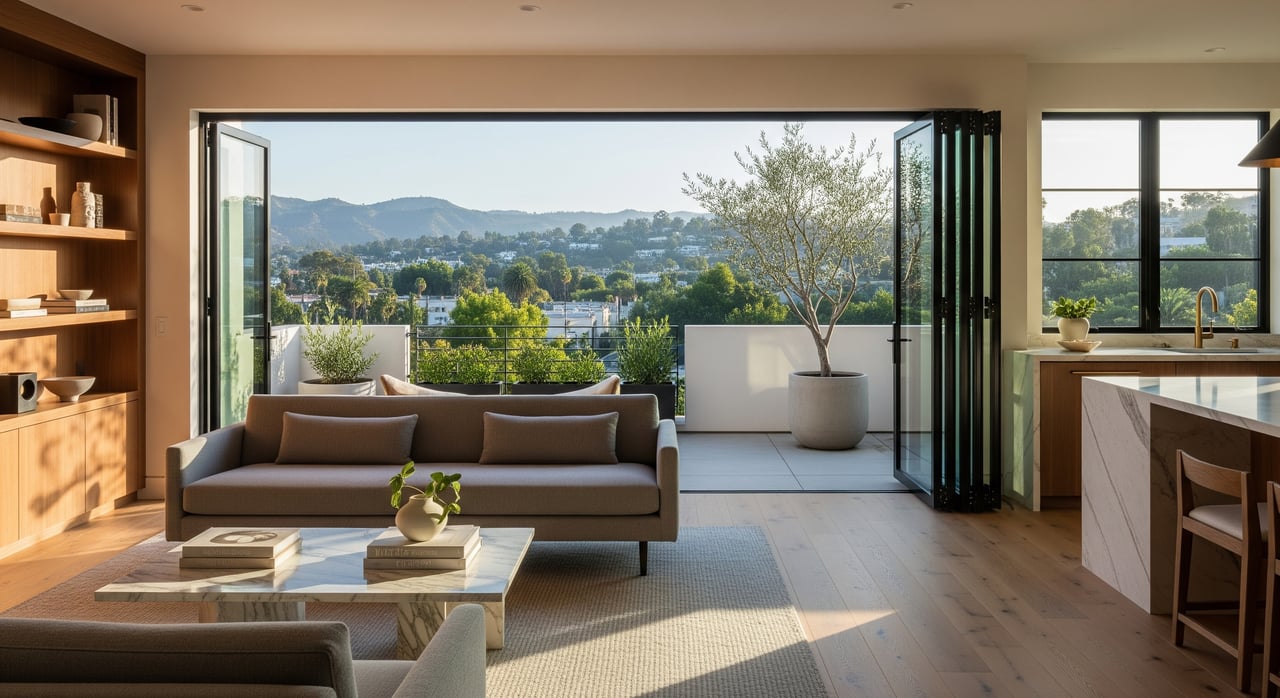
Trying to decide between a condo and a townhome in Sherman Oaks? You are not alone. Both options offer great value compared to single-family homes, but the differences can affect your budget, daily routine, and long-term flexibility. In this guide, you will learn how ownership works in California, what HOAs typically cover, how parking and EV charging vary, and which option fits your lifestyle in Sherman Oaks. Let’s dive in.
Condo vs. townhome in California: what it means
Buying a condo in California typically means you own the interior of your unit and share ownership of the common areas with your neighbors. The homeowners association manages the common elements and enforces community rules. In most condo projects, the HOA is responsible for the building’s exterior and structural components.
A townhome is a building style rather than a single legal category. In California, a townhome can be organized as a condominium or as a planned unit development (often called PUD or lot ownership). That legal form determines who owns the land and who maintains the roof and exterior.
How ownership works
- Condominiums: You own the airspace within your unit plus an undivided interest in shared areas. The HOA controls the CC&Rs, collects assessments, and maintains common elements.
- Townhomes that are condos: You may still share ownership of common areas, with the HOA handling the exterior, similar to stacked condos.
- Townhomes in a PUD or lot ownership: You typically own the structure and the land beneath it. The HOA maintains only shared items such as private roads, landscaping at entries, or community amenities.
Why it matters for your wallet
- Maintenance: In many condos, the HOA handles exterior items like the roof and siding. In PUD townhomes, you may be responsible for exterior upkeep. Always check the CC&Rs and any maintenance matrix.
- Insurance: Condo owners usually carry an HO-6 policy for interiors, while the HOA’s master policy covers common areas and sometimes the building shell. PUD townhome owners often need a broader HO-3 policy that covers the structure and land.
- Financing: Lenders often apply project-level reviews for condo complexes. PUD townhomes with individually titled lots can be simpler to finance, but never assume. Confirm project eligibility and “warrantability” with your lender early.
HOA health: what to request and review
Before you write an offer, ask for a complete HOA disclosure packet. You want clarity about costs, rules, and future risk. Key documents include:
- CC&Rs, Bylaws, and Rules and Regulations
- The most recent budget, income and expense statements, and a reserve study
- Minutes of board meetings for the last 12 to 24 months
- Master insurance certificates
- Any current or planned special assessments, delinquency lists, and pending litigation
- Rental caps or policies and the owner to tenant ratio
What to look for:
- Reserve adequacy and deferred maintenance. Many Sherman Oaks buildings from the 1950s to 1980s may need envelope, plumbing, or seismic work. Low reserves can lead to special assessments.
- Special assessment history and large repairs on the horizon, such as roofs or plumbing replacements.
- Rules that shape daily life, including pet policies, noise standards, satellite rules, and short-term rental limits.
- Governance and transparency, including clear financials and consistent communication.
- Insurance coverage and gaps. Confirm if the master policy is bare walls or all-in, since this affects your HO-6 coverage and risk.
Parking and EV charging in Sherman Oaks
Parking can be the make-or-break factor in the Valley. Sherman Oaks condos along and near Ventura Boulevard often provide assigned parking in subterranean garages or tandem spaces. Guest parking can be limited, especially in older buildings. Townhomes more often include private 1 to 2 car attached garages with direct entry, which can help with storage and convenience.
What to verify:
- Assigned versus deeded spaces. Assigned spaces are common in condos and usually do not convey separate title. Deeded garages or spaces are more typical in PUD townhome communities and are owned by the unit owner.
- Tandem parking. This is common in denser buildings and can be inconvenient for multi-driver households.
- Street parking. Near commercial corridors, the City of Los Angeles may restrict on-street parking. Do not assume easy guest parking without checking local rules.
EV charging:
- Garages in townhomes usually make charging simpler and provide extra storage.
- In multi-unit HOAs, installing a personal EV charger often requires HOA approval and coordination with building electrical capacity. California law limits an HOA’s ability to unreasonably block charging, but you should expect an application process and cost allocation.
Outdoor space and privacy
Condos typically offer balconies, small patios, or shared courtyards. Older low-rise garden-style buildings in Sherman Oaks often center around interior courtyards, while newer projects may add rooftop decks and club areas. Townhomes more often feature private front patios, rear yards, and multiple balconies, which appeals to buyers who want ground-level access and more privacy.
Considerations for daily life:
- Gardening and pets. Townhomes often make small gardens and patios easier, subject to HOA rules.
- Noise and privacy. Fewer neighbors above or below in many townhome layouts can reduce noise transfer compared to stacked condos.
- Maintenance. Private yards can add upkeep responsibilities for landscaping and fences unless the HOA maintains them.
- Sherman Oaks climate. With year-round outdoor living, a larger patio or terrace can be a big lifestyle upgrade for entertaining.
What you will find in Sherman Oaks
Sherman Oaks offers a mix of older condos, 1980s to 2000s amenitized low-rise buildings, and newer infill townhomes. Here is a quick snapshot of common product types:
- Mid-century low-rise condos from the 1950s to 1970s, often courtyard style with surface parking or carports.
- Mediterranean and Spanish-influenced low-rise and podium buildings from the 1980s to 2000s with subterranean parking and amenities like pools and gyms.
- Newer attached townhomes from the 2000s to 2020s, usually 2 to 3 stories with modern finishes and 2 car garages.
- A limited number of higher-end townhomes with private garages and rooftop decks.
Location patterns:
- Along Ventura Boulevard and by the Galleria, you will find denser condo options with walkable access to dining and retail.
- Toward the northern hillsides and around Van Nuys Boulevard, you will see more single-family homes and pockets of townhomes on quieter residential streets.
- Proximity to the 405 and 101 improves commute options but may raise noise levels. Buyers often trade a faster commute for quieter streets.
Market and pricing context:
- Condos and townhomes are typically priced below single-family homes in Sherman Oaks.
- HOA fees vary widely and often reflect amenities, exterior maintenance scope, and included utilities like water or gas.
- Well-maintained townhomes with private garages tend to command a premium, especially among downsizers who want private parking and fewer neighbors.
Financing, appraisal, insurance, and resale
Financing:
- Many lenders require condo projects to meet certain criteria, including owner occupancy ratios, adequate reserves, and no disqualifying litigation. If a condo project is not warrantable, your loan choices may narrow or become more costly.
- PUD townhomes with lot ownership frequently avoid condo project approvals and can be easier to finance. Always have your lender verify the project type and eligibility early.
Appraisals and comparables:
- Appraisers compare like to like. Stacked condos are compared to other condos, and townhomes are compared to townhomes or similar attached homes. Do not assume a townhome will appraise like a condo in a different legal form.
Insurance:
- Condo buyers typically carry an HO-6 policy for interior coverage and need to understand the master policy deductible and gaps.
- Townhome buyers with lot ownership usually carry an HO-3 policy that insures the structure and the land.
Resale and liquidity:
- Strong parking, lower litigation risk, stable reserves, and clear rules support resale strength.
- Townhomes with deeded garages tend to maintain steady demand among downsizers and multi-driver households.
- Condo resale can be more sensitive to HOA litigation, special assessments, and limited parking.
Quick decision checklists
Lifestyle fit:
- Choose a condo if you want lower day-to-day upkeep, enjoy shared amenities like pools and gyms, prefer a smaller footprint, and can accept assigned or tandem parking.
- Choose a townhome if you want a private patio or yard, direct garage access, fewer neighbors above or below, and are comfortable with some exterior maintenance if required.
Budget and total monthly cost:
- Condos can offer a lower entry price, but HOA fees may be higher depending on amenities. Compare your full monthly cost: mortgage, HOA, insurance, and property taxes.
- Account for special assessment risk in older buildings. Review reserve studies and recent board minutes to gauge upcoming capital needs.
Due diligence steps:
- Review the complete HOA packet and financials.
- Speak with the HOA manager or board about recent maintenance and assessments.
- Check city permit records and any code issues through Los Angeles Building and Safety.
- Order a detailed physical inspection that pays attention to water intrusion, plumbing, electrical capacity, and roof or structural items.
- Confirm financing with a lender familiar with Los Angeles condo and townhome projects.
Next steps with a local advisor
The right choice in Sherman Oaks depends on how you want to live, park, entertain, and budget over time. If you set your non-negotiables now, you can quickly narrow options and focus on the properties that make sense. A local guide can help you weigh HOA health, parking realities, and project eligibility so you move forward with confidence.
If you want a clear plan, neighborhood-specific advice, and skilled representation from search to closing, reach out to Arthur Aslanian.
FAQs
What is the core difference between a condo and a townhome in California?
- A condo is a legal form where you own the interior of your unit and share common areas, while a townhome is a building style that can be organized as either a condo or a PUD where you may own the structure and land.
In Sherman Oaks, who maintains the roof and exterior on attached homes?
- It depends on the legal form and CC&Rs; many condos have HOA responsibility for exterior items, while PUD townhomes often place roof and exterior maintenance on the owner.
How do HOA fees typically differ between condos and townhomes?
- Condo fees can be higher when they cover exterior maintenance and amenities, while PUD townhome fees may be lower but you might pay more out of pocket for exterior upkeep.
Can I install an EV charger in a Sherman Oaks condo or townhome?
- California law supports homeowner EV charging, but most HOAs require an approval process and compliance with building capacity and cost allocation rules.
Are townhomes easier to finance than condos in Los Angeles?
- PUD townhomes often avoid condo project approval and can be simpler to finance, but you must verify the property’s legal form and confirm project eligibility with your lender.
What HOA documents should I review before making an offer?
- Request CC&Rs, bylaws, rules, recent financials and reserve study, board meeting minutes, master insurance, and any disclosures on assessments or litigation.
Why does parking type matter for resale in Sherman Oaks?
- Deeded garages and non-tandem parking often improve convenience and resale appeal, while assigned or tandem spaces can limit flexibility for multi-driver households.
