If you have toured a few homes in Sherman Oaks and felt like no two floor plans work the same way, you are not imagining it. A one-story ranch on a flat street can live very differently from a split-level home in the hills or a remodeled house with a wide-open great room. When you understand why those layouts differ and what to look for in each one, you can make a smarter decision about daily comfort, future flexibility, and long-term value. Let’s dive in.
Why Sherman Oaks Layouts Vary
Sherman Oaks has a long residential history, and the neighborhood’s physical layout plays a big role in how homes are designed. City planning documents describe a clear difference between the flatter area north of Ventura Boulevard and the hillside area to the south. That difference shows up in street patterns, lot conditions, and the way homes are arranged inside.
North of Ventura Boulevard, the terrain is generally flatter and follows more of a grid pattern. In these areas, you are more likely to see early- to mid-20th-century subdivisions with lower-scale single-family homes and more straightforward floor plans. That often means easier one-level living and more predictable room placement.
South of Ventura Boulevard, the land rises into the Santa Monica Mountains. City planning documents note that this area developed with curving streets and cul-de-sacs, and the challenging topography encouraged more experimentation in design and engineering. In practical terms, that often leads to stepped interiors, split-level layouts, and garage-under entries.
That context matters because Sherman Oaks is not just one housing type. It is a neighborhood where the lot, slope, and era of construction can shape how a home functions day to day.
Ranch Layouts in Sherman Oaks
Ranch homes are one of the most important layout types in Sherman Oaks. The classic California ranch is known for its low-slung profile, horizontal design, and relaxed approach to living. These homes often emphasized easy indoor-outdoor flow, which still makes them appealing today.
City and preservation sources describe ranch homes as informal and asymmetrical, often with low-pitched roofs, picture windows, attached garages, and open floor plans. In many cases, the kitchen, living area, and yard connect in a way that supports casual daily living and entertaining. That flow is a big reason so many buyers still respond well to this layout.
A true advantage of the ranch layout is simplicity. If you want fewer stairs, a more direct connection to the backyard, and a floor plan that is easy to navigate, a one-story home can be a strong fit. It can also offer a clear separation between shared living areas and bedrooms when the layout is well planned.
What to Check in a Ranch Home
When you tour a ranch home in Sherman Oaks, focus less on style labels and more on how the layout performs. Some homes have kept their original flow, while others have been expanded or altered over time.
Here are a few practical things to look at:
- How the kitchen connects to the family room or main living area
- Whether sliding doors, patios, or yard access feel natural and usable
- Whether the bedroom wing feels private enough from the main entertaining spaces
- How much storage the home offers
- Whether later additions make the floor plan feel awkward or disconnected
The best ranch layouts tend to feel cohesive. Even when updated, they usually work best when the original indoor-outdoor rhythm and easy circulation are still intact.
Split-Level and Hillside Layouts
If you are shopping south of Ventura Boulevard, you are more likely to come across split-level or hillside homes. These layouts are closely tied to the slope of the land. In Sherman Oaks, city planning records describe homes on hillside sites with attached garages built into the lower part of the slope, along with stepped floor plans that respond to elevation changes.
That means a hillside home often gives you a different living experience from a ranch on a flat lot. Instead of one long horizontal plan, you may see multiple levels that divide the house into separate zones. The garage may sit below the main living areas, and the entry sequence may involve stairs or level changes right from the start.
For some buyers, that trade-off is worth it. Split-level homes can offer a stronger sense of separation between sleeping, working, and entertaining spaces. They can also create a more distinct feeling of privacy because the layout naturally breaks up the home.
What to Check in a Hillside Home
A hillside layout can be a great match if you want separation and character, but it is important to understand how the floor plan works in real life. A home that feels interesting on paper can feel less convenient if the circulation does not match your routine.
As you tour, pay attention to:
- The total stair count from garage to kitchen to bedrooms
- Where the main entry sits in relation to the living spaces
- Whether upper and lower levels feel private or disconnected
- How the garage placement affects daily unloading and access
- Whether room changes in elevation improve function or just create extra steps
In Sherman Oaks, these homes often reflect the site in a very direct way. That can make them memorable and appealing, but also more specific in who they fit best.
Open-Concept and Remodeled Layouts
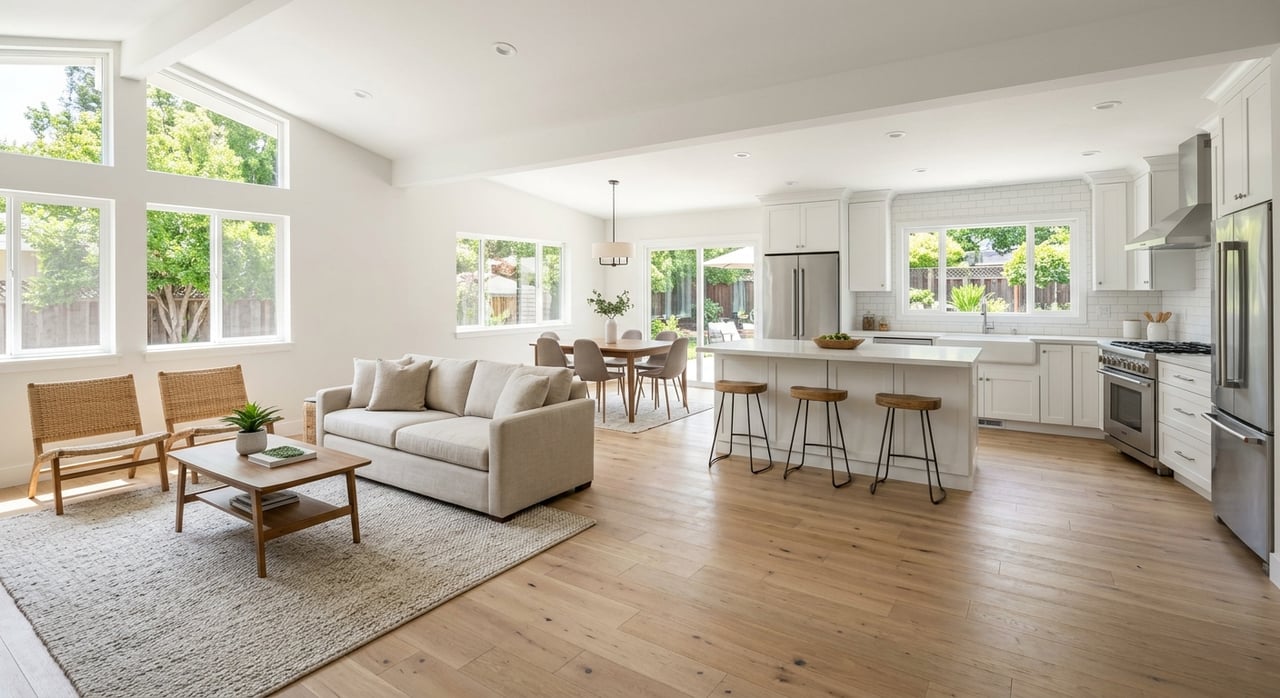
Many buyers ask for an open-concept home, but in Sherman Oaks that term can mean a few different things. Sometimes it refers to a newer infill house with a large kitchen-family room area. Other times, it describes an older ranch that has been remodeled by removing walls to create a more open main living zone.
Interestingly, the roots of open-concept living are not entirely new. City historic context materials note that ranch homes already embraced open, free-flowing plans, while later homes in the 1970s and 1980s introduced features like great rooms, cathedral ceilings, and grand foyers. So when you walk into a remodeled Sherman Oaks home, you may be seeing an updated version of ideas that have existed for decades.
The question is not simply whether a home feels open. The better question is whether that openness improves the way you live. A large shared room can look impressive, but it still needs to support cooking, relaxing, working, and hosting without feeling chaotic.
What to Check in an Open Layout
Open-concept homes can feel bright and spacious, but they are not automatically better for every household. A smart layout balances openness with enough definition to keep the home practical.
Look for these details:
- Whether the kitchen has a natural relationship to dining and living areas
- How noise carries across the main living space
- Whether there is a quiet room or flexible area for work from home
- How natural light moves through the shared spaces
- Whether the layout can handle everyday storage and visual clutter
This matters even more if you want the home to support changing needs over time. City planning documents for the area highlight the importance of housing flexibility for different household sizes and multigenerational living, so room mix and adaptability deserve real attention.
Matching the Layout to Your Daily Life
A floor plan can look good online and still feel wrong once you live in it. That is why the best layout is usually not the trendiest one. It is the one that supports the way you actually move through your day.
If you value easy circulation and direct backyard access, a ranch may feel most comfortable. If you want more separation between living zones, a split-level plan may be more appealing. If you host often or want one shared central space, an open-concept layout may make more sense.
Try to think beyond square footage. Ask yourself how you want mornings, work hours, evenings, and weekends to feel in the home. That lens usually tells you more than labels like traditional or modern.
Long-Term Livability and Resale
Sherman Oaks planning policy places strong emphasis on preserving neighborhood scale, compatibility, and established residential character. While that is not a pricing study, it does offer a useful lens for thinking about long-term livability and resale.
In general, layouts that fit the lot well and feel functional tend to age better than homes that feel oversized or awkward for their setting. A house that maintains practical room separation, sensible circulation, and strong street-facing proportions may appeal to a broader pool of future buyers. That can matter when it is time to sell.
For sellers, layout also affects presentation. A home with a clear flow is easier to stage well, easier to photograph, and often easier for buyers to understand during a showing. That is especially important in a market like Sherman Oaks, where buyers may be comparing older ranches, hillside properties, and updated homes all at once.
How to Tour Layouts More Effectively
If you want to compare Sherman Oaks homes with more confidence, keep your focus on livability rather than just finishes. Paint color and countertops are easier to change than circulation, stair placement, or the relationship between indoor and outdoor space.
A simple tour checklist can help:
- Stand at the entry and trace your likely daily path through the home
- Check how easily shared rooms connect to the yard or patio
- Notice whether bedrooms feel quiet and separated enough
- Count stairs that you would use every day, not just occasionally
- Look for signs that additions changed the plan in a way that feels disjointed
- Ask whether the home has flexible space for future needs
That kind of walkthrough can quickly reveal whether a home only looks good or actually lives well.
If you are buying or selling in Sherman Oaks, understanding layout is a real advantage. The neighborhood offers meaningful variety, and the right guidance can help you spot the difference between a home that is merely attractive and one that truly fits your goals. If you want experienced Valley insight on how a Sherman Oaks home layout may affect daily living, marketability, or presentation, connect with Arthur Aslanian.
FAQs
What are the most common single-family home layouts in Sherman Oaks?
- The most common layouts you will likely encounter are one-story ranch homes, split-level or hillside homes, and newer or remodeled open-concept homes.
Why do Sherman Oaks homes have such different floor plans?
- A major reason is topography. Flatter areas north of Ventura Boulevard tend to have more traditional subdivisions and simpler layouts, while hillside areas south of Ventura often have stepped or split-level designs shaped by sloped lots.
What should you look for in a Sherman Oaks ranch home layout?
- Focus on circulation, backyard connection, bedroom privacy, storage, and whether any additions have made the floor plan feel awkward or less cohesive.
Are split-level homes common in Sherman Oaks hillside areas?
- Yes. City planning records describe split-level homes and garage-under designs as common responses to sloped sites in hillside parts of Sherman Oaks.
Is an open-concept layout always better in Sherman Oaks homes?
- Not always. An open layout can feel spacious and bright, but the best choice depends on whether it supports your need for privacy, work space, noise control, and everyday function.
